Intent Signal & Buying-Trigger Monitoring System
An Intent Signal & Buying-Trigger Monitoring costs $1,000 – $2,200 at PINCLER and takes 10–18 days to build. Know who is hiring, funded or switching tools – and reach them the same day.
The price moves inside the $1,000 – $2,200 band based on how many of the features you need, the number of integrations, the number of user roles and whether existing data has to be migrated. That band is possible because AI coding tools write the first draft while senior engineers review every line, add automated tests and harden security. It covers this one workflow with standard integrations and never exceeds $2,500.
- Fixed price
- $1,000 – $2,200
- Delivery
- 10–18 days
- Built with
- Claude · GPT · Cursor · DeepSeek
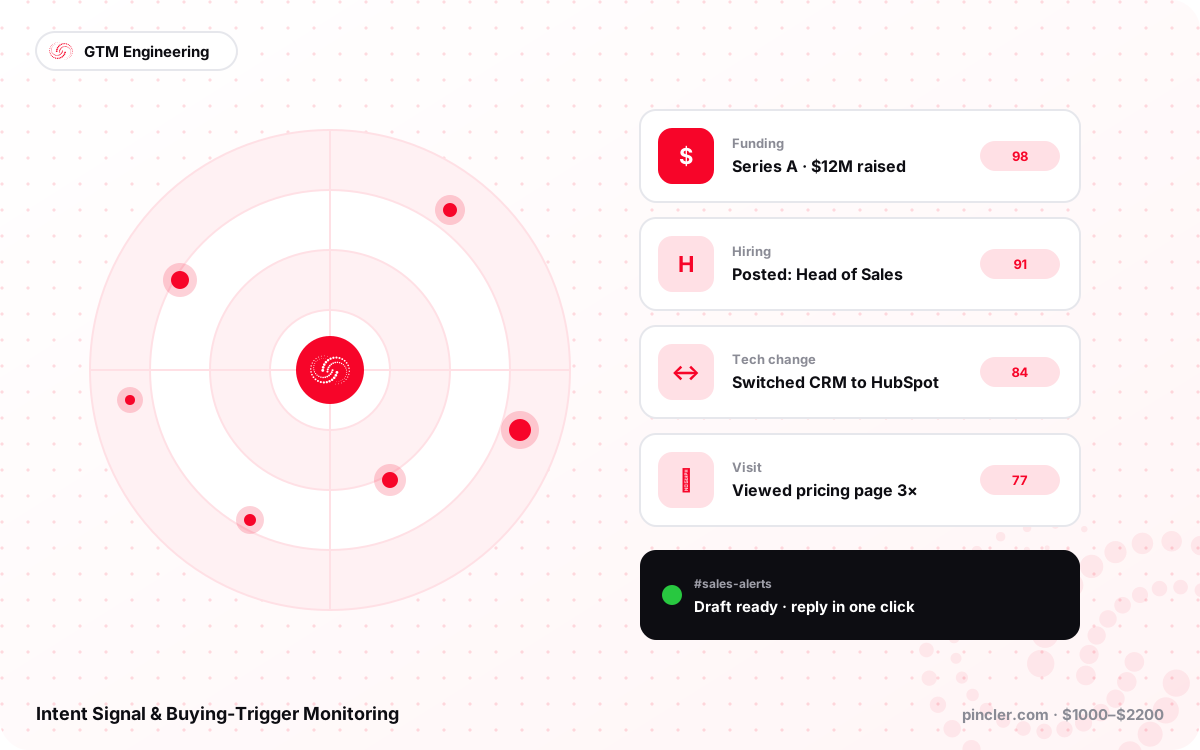
Intent-signal monitoring that watches job posts, funding news, tech changes and website visits, then alerts sales with an AI-drafted message. GTM engineering from $1,000 to $2,200.
The problem
The best time to reach a prospect is the week they raise money, post a sales job or visit your pricing page – and most teams find out months later, if at all. Manually checking LinkedIn, Crunchbase and analytics does not scale, and generic intent-data subscriptions cost thousands a year for signals that arrive stale.
What we build
We build a monitoring layer that polls the sources that matter to you – job boards, funding announcements, technology-change trackers, Google News, review sites and your own website visitor identification – and turns raw events into scored triggers. Claude classifies each signal against your ICP, GPT drafts a relevant first message, and the alert lands in Slack, WhatsApp or your CRM with one-click actions. Using Cursor and n8n we have the first sources live within a week and add the rest with your team's feedback. Custom software development from $1,000 to $2,200, with a hard ceiling of $2,500.
Features included
- Job-post, funding and news monitoring
- Technology-change and website-visitor signals
- AI signal scoring against your ICP
- Drafted outreach attached to every alert
- Slack, WhatsApp and email alerts
- CRM task creation with signal context
- Deduplication and cool-down rules
- Signal dashboard with hit-rate tracking
What you receive
- Monitoring workflows in your n8n or Python stack
- Signal database and dashboard
- Scoring prompts and ICP rules, editable
- Source setup guide and handover video
- 30-day bug-fix warranty
How we build it
- Day 0: free 30-minute call to choose the three signals that best predict your closed deals, followed by a written fixed quote
- Days 1–5: the first sources go live in your n8n stack – job posts, funding announcements and news – with the signal database behind them
- Days 6–10: Claude scores each signal against your ICP, GPT drafts the outreach attached to every alert, and deduplication with cool-down rules is added
- Days 11–14: alerts are wired into Slack, WhatsApp and email, with CRM tasks created in HubSpot, Zoho or Pipedrive carrying full signal context
- Days 15–18: you review real signals with us, weak sources are dropped, and handover, dashboard training and the 30-day warranty follow
What each budget gets you
| Budget | Build | What changes |
|---|---|---|
| $1,000 | Three-signal setup | Three sources such as job posts, funding news and press mentions, Claude scoring against your ICP and alerts into one Slack channel |
| $1,600 | Multi-channel alerts | Adds technology-change and review-site tracking, GPT-drafted outreach on every alert, WhatsApp and email delivery, and deduplication with cool-down rules |
| $2,200 | Full signal engine | Adds website visitor identification, Playwright coverage of browser-only sources, CRM task creation with signal context and the hit-rate dashboard |
Ideal for
- B2B SaaS
- Recruitment agencies
- Commercial real estate
- IT services firms
- Fintech and payments providers
FAQ
Intent Signal & Buying-Trigger Monitoring: common questions
What is intent signal and buying-trigger monitoring?
Intent signal and buying-trigger monitoring watches the events that mean a prospect is close to buying, such as a funding round, a relevant job post, a technology change or a visit to your pricing page, then alerts your sales team the same day with a drafted message attached. Raw events are scored against your ICP rather than dumped into a feed. Alerts land in Slack, WhatsApp or your CRM with one-click actions.
How much does intent signal monitoring cost?
Intent signal monitoring costs $1,000 to $2,200 at PINCLER as a fixed price. The number of sources, alert channels and CRM integration decide where you land. Any third-party data or visitor-identification subscription is billed to you separately, and our quote never exceeds $2,500.
How fast is it live?
Intent signal monitoring takes 10 to 18 days to build, with the first sources live within the first week. The remaining time goes into scoring against your ICP, deduplication and cool-down rules, and the alert routing. You review real signals with us before the system reaches the whole team.
Where do alerts go and what can it connect to?
Alerts route to Slack, WhatsApp and email, and create tasks with full signal context in HubSpot, Zoho or Pipedrive. Sources include job boards, funding announcements, news feeds, technology-change trackers, review sites and website visitor identification. Playwright handles sites that need a real browser to read.
Which signals can you monitor?
The system can monitor hiring posts, funding rounds, leadership changes, technology adoption, news mentions, review-site activity and identified website visitors. We start with the three signals that best predict your closed deals rather than switching everything on, because a noisy feed gets ignored within a fortnight. The dashboard tracks hit rate per signal, so you can drop the ones that do not convert.
Is this compliant with data-protection rules?
The system uses public and first-party data only, honours robots rules and rate limits, and stores personal data in your own systems with retention periods agreed up front. The workflows and signal database sit in your own n8n or Python stack. We do not give legal advice on data-protection rules, so confirm your approach with a licensed advisor.
Is this better than buying intent data from a vendor?
Intent data vendors give you category-level buying signals across a wide market, which a custom build cannot replicate. This system is better at first-party and public triggers specific to you: your pricing-page visitors, a named account's job posts, a competitor's customer raising money. Many teams run both, and a custom build costs $1,000 to $2,200 once rather than an annual subscription.
Who is this for, and when is it not worth it?
Signal monitoring works when a rep will genuinely act on an alert within a day or two and your sales cycle is short enough for timing to matter. If your team already has more leads than it can call, this adds noise rather than pipeline. It is also weak in markets where buying triggers are not publicly visible, as much of SME retail gives off no signal at all.
Related
Similar projects within the same budget
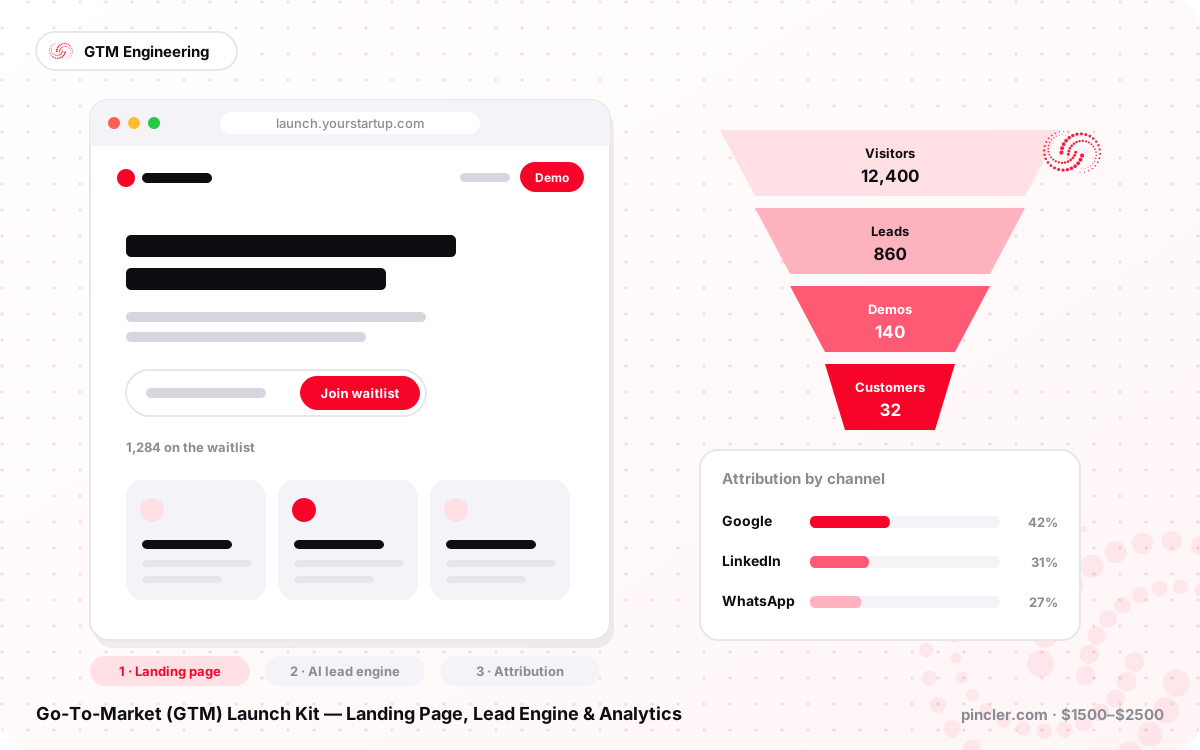
Go-To-Market (GTM) Launch Kit — Landing Page, Lead Engine & Analytics
Fixed-price go-to-market kit: SEO landing page with lead capture, AI lead engine for email, WhatsApp and LinkedIn follow-ups, and an attribution dashboard. $1,500 – $2,500 in 14–21 days.
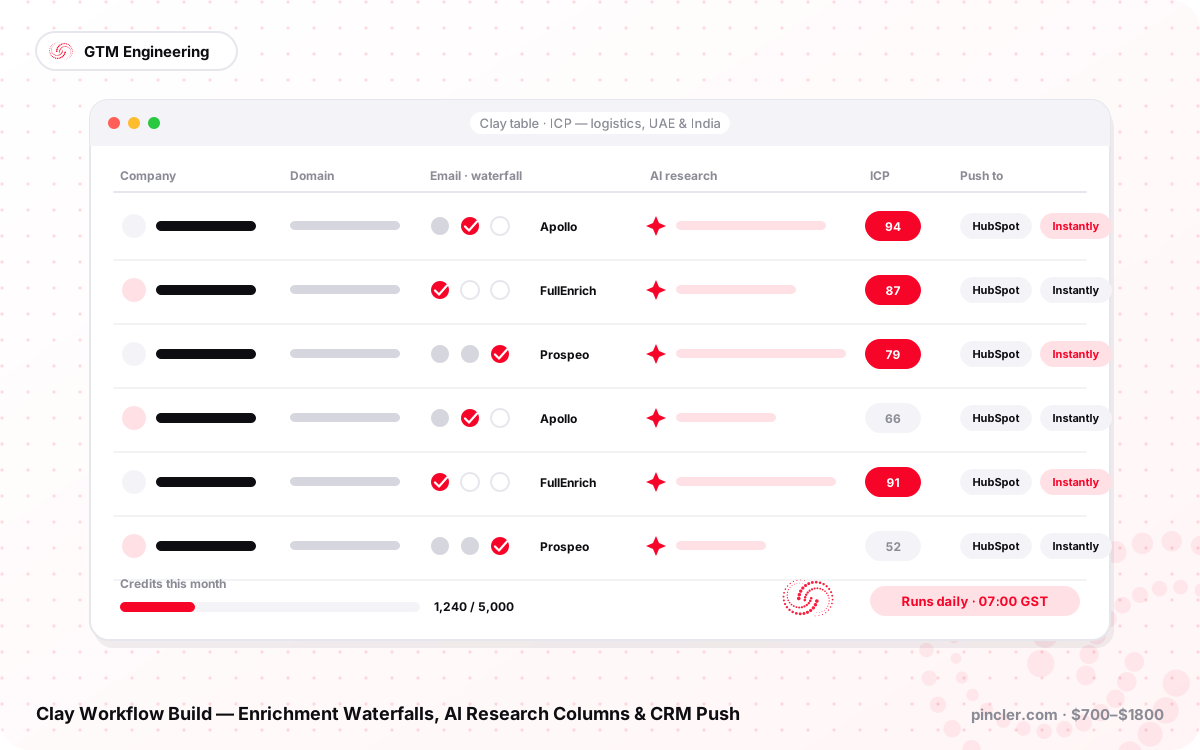
Clay Workflow Build — Enrichment Waterfalls, AI Research Columns & CRM Push
Expert Clay build-out: ICP sourcing, credit-efficient enrichment waterfalls, Claude and GPT research columns and pushes to HubSpot, Instantly or Smartlead. From $700 to $1,800.
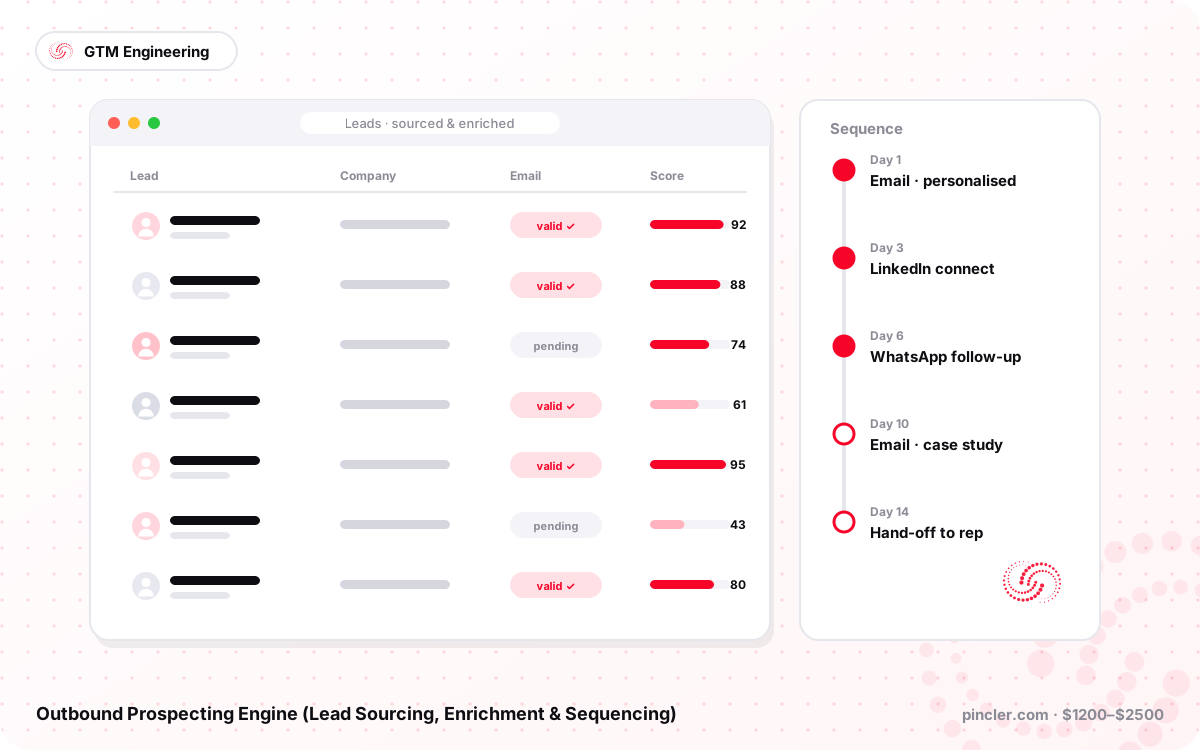
Outbound Prospecting Engine (Lead Sourcing, Enrichment & Sequencing)
Outbound engine that sources leads from LinkedIn, Apollo and Google Maps, enriches and scores them with AI, and feeds personalised sequences. GTM engineering from $1,200 to $2,500.