Outbound Prospecting Engine Development with Lead Sourcing, Enrichment & Sequencing
An Outbound Prospecting Engine costs $1,200 – $2,500 at PINCLER and takes 12–20 days to build. A Clay-style outbound machine that sources, enriches and sequences leads while you sleep.
The price moves inside the $1,200 – $2,500 band based on how many of the features you need, the number of integrations, the number of user roles and whether existing data has to be migrated. That band is possible because AI coding tools write the first draft while senior engineers review every line, add automated tests and harden security. It covers this one workflow with standard integrations and never exceeds $2,500.
- Fixed price
- $1,200 – $2,500
- Delivery
- 12–20 days
- Built with
- Claude · GPT · Cursor · Claude Code · DeepSeek
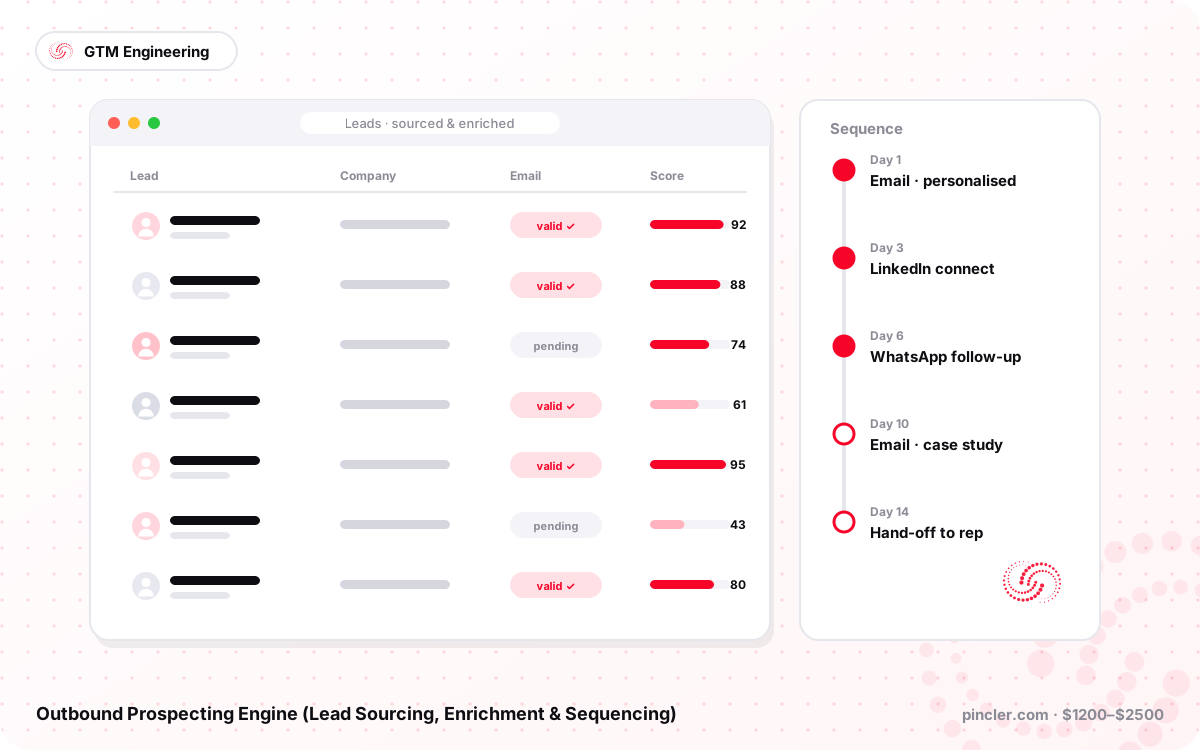
Outbound engine that sources leads from LinkedIn, Apollo and Google Maps, enriches and scores them with AI, and feeds personalised sequences. GTM engineering from $1,200 to $2,500.
The problem
Sales teams in Dubai and Bangalore still build lists by hand, copy contacts between LinkedIn, spreadsheets and the CRM, and send the same template to everyone. Reply rates fall below 2%, SDR hours go into data entry instead of conversations, and tools like Clay, Apollo and Smartlead are paid for but wired together badly or not at all.
What we build
We build a custom outbound engine: scheduled sourcing from LinkedIn Sales Navigator exports, Apollo, Google Maps and your own site visitors; waterfall enrichment and email validation; AI scoring and ICP fit with Claude; personalised first lines generated by GPT with human-reviewed guardrails; and automatic sequencing through Instantly, Smartlead or Lemlist with replies routed to your CRM. Using Cursor and Claude Code we assemble the n8n workflows, Supabase lead store and review dashboard in days, then tune scoring on your real reply data. Custom software development priced from $1,200 to $2,500 – never above $2,500 – with every tool account owned by you.
Features included
- Lead sourcing from LinkedIn, Apollo and Google Maps
- Email validation and waterfall enrichment
- AI ICP scoring and segmentation with Claude
- Personalised first lines generated per lead
- Sequencing via Instantly, Smartlead or Lemlist
- Reply detection and CRM hand-off
- Domain warm-up and sending-limit safeguards
- Review queue for human approval before send
- Weekly reply-rate and bounce reporting
What you receive
- n8n or Python workflows in your own accounts
- Lead store and review dashboard on Supabase
- Prompt library and scoring rules, fully editable
- Deliverability setup guide and handover video
- 30-day bug-fix warranty
How we build it
- Day 0: free 30-minute call to fix your ICP, lead sources and sequencing tools, followed by a written fixed quote
- Days 1–4: sourcing from LinkedIn Sales Navigator exports, Apollo and Google Maps goes up with validation and waterfall enrichment
- Days 5–9: Claude ICP scoring, GPT personalised first lines and the review queue are built on the Supabase lead store
- Days 10–14: sequencing through Instantly, Smartlead or Lemlist goes live with domain warm-up and sending-limit safeguards
- Days 15–18: reply detection and CRM hand-off are wired in and weekly reply-rate and bounce reporting starts
- Days 19–20: launch with the deliverability guide and handover video; scoring is tuned on real reply data inside the 30-day warranty
What each budget gets you
| Budget | Build | What changes |
|---|---|---|
| $1,200 | Single-source engine | One lead source into a Supabase lead store, email validation and enrichment, Claude ICP scoring and sequences through one sender such as Instantly |
| $1,800 | Multi-source engine | Adds Apollo and Google Maps sourcing on a schedule, GPT personalised first lines with the human review queue, and replies routed into HubSpot, Zoho or Pipedrive |
| $2,500 | Full outbound machine | Adds website-visitor sourcing, waterfall enrichment across providers, domain warm-up with sending-limit safeguards and weekly reply-rate and bounce reporting |
Ideal for
- B2B SaaS sales teams
- Agencies selling outbound
- Recruitment firms
- Founders doing founder-led sales
- Export and trading companies
FAQ
Outbound Prospecting Engine (Lead Sourcing, Enrichment & Sequencing): common questions
What is an outbound prospecting engine?
An outbound prospecting engine sources leads on a schedule from LinkedIn Sales Navigator, Apollo, Google Maps and your own site visitors, validates and enriches them, scores them against your ICP, generates a personalised first line and feeds them into sequences in Instantly, Smartlead or Lemlist. Replies are detected and routed to your CRM. It replaces the manual list-building and copy-paste that consumes most SDR hours.
How much does an outbound prospecting engine cost?
An outbound prospecting engine costs $1,200 to $2,500 at PINCLER as a fixed price. The number of lead sources, sequencing tools and CRM integrations decide where you land within the band. Tool subscriptions and enrichment credits stay in your name and are billed to you, and our quote never exceeds $2,500.
How long does it take to build?
An outbound engine takes 12 to 20 days to build. Sourcing and enrichment go up first, then scoring and personalisation, then sequencing and reply routing. We tune the scoring on your real reply data after go-live, inside the 30-day window.
Which sequencers and CRMs does it work with?
The engine integrates with Instantly, Smartlead and Lemlist for sending, HubSpot, Zoho and Pipedrive for CRM, and Apollo, Clay and waterfall providers for data. Workflows run in n8n or Python with the lead store on Supabase. Every account and subscription is registered in your name.
Will this get my domain flagged for spam?
Deliverability is designed in rather than hoped for: separate sending domains, warm-up, daily sending limits, address validation before every send and a human review queue. The rules are written into the handover so your team knows what not to change. No system can guarantee inbox placement, but these are the controls that decide it.
Who owns the workflows, prompts and lead data?
Every workflow, prompt and scoring rule is delivered into your own accounts: your n8n or Python stack, your Supabase and your sequencer, with the source in your repository. Lead data never sits with PINCLER. The prompt library and scoring rules are plain text your team edits directly.
Do I need Clay or Apollo, or would they be enough on their own?
Clay plus a sequencer is the right answer for most teams starting out and it is cheaper. You do not necessarily need new subscriptions either, since we use the tools you already pay for and fill gaps with open APIs. A custom engine is worth it when you run several sources on a schedule, need scoring logic and a review queue that Clay templates do not express, or want the whole flow in systems you control.
Who is this for, and when is it not worth it?
An outbound prospecting engine suits teams already sending outbound at volume, such as agencies, B2B software and recruitment, with a defined ICP and someone available to work the replies it generates. If nobody can handle the replies, do not build it, because the bottleneck moves rather than disappears. Outbound is also a poor fit for very small or highly relationship-driven markets, where twenty warm introductions beat two thousand emails.
Related
Similar projects within the same budget
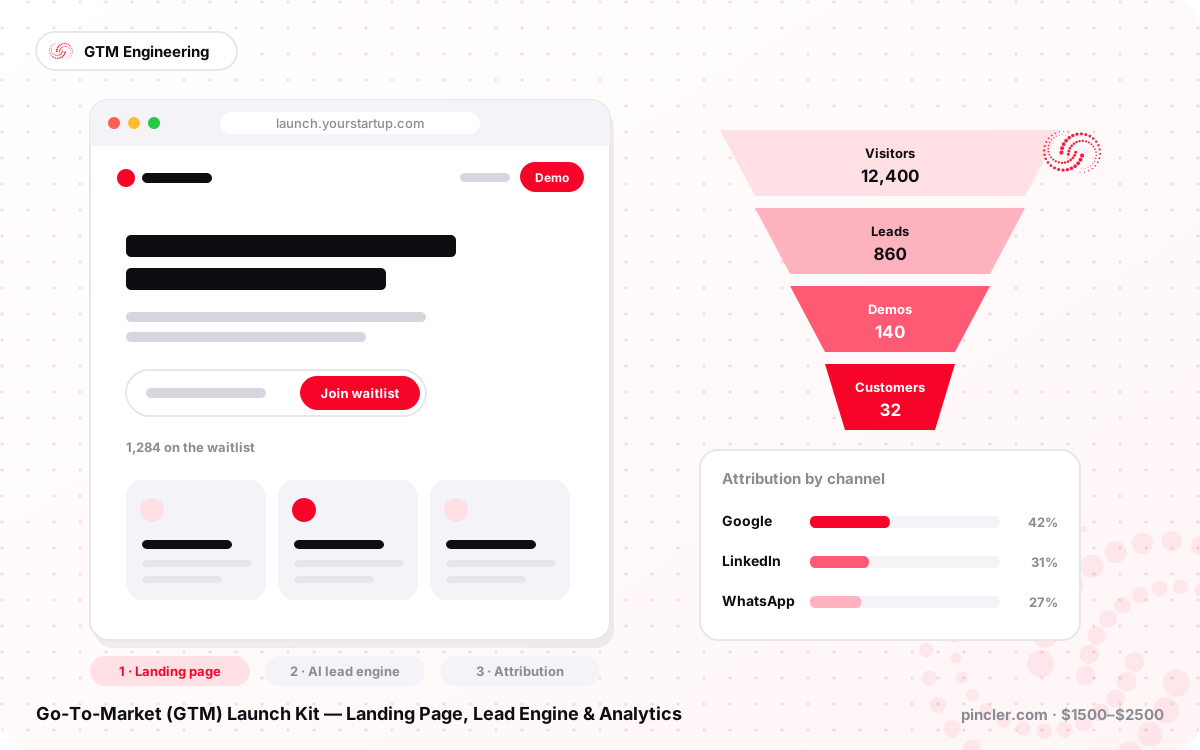
Go-To-Market (GTM) Launch Kit — Landing Page, Lead Engine & Analytics
Fixed-price go-to-market kit: SEO landing page with lead capture, AI lead engine for email, WhatsApp and LinkedIn follow-ups, and an attribution dashboard. $1,500 – $2,500 in 14–21 days.
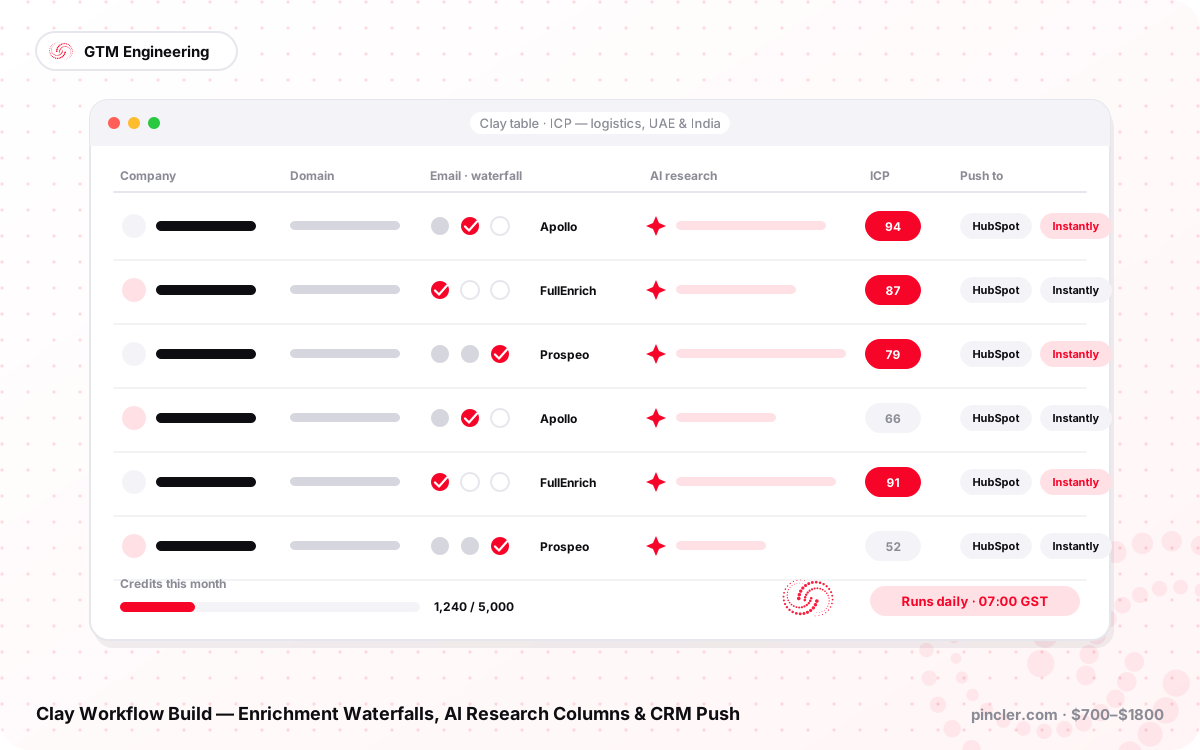
Clay Workflow Build — Enrichment Waterfalls, AI Research Columns & CRM Push
Expert Clay build-out: ICP sourcing, credit-efficient enrichment waterfalls, Claude and GPT research columns and pushes to HubSpot, Instantly or Smartlead. From $700 to $1,800.
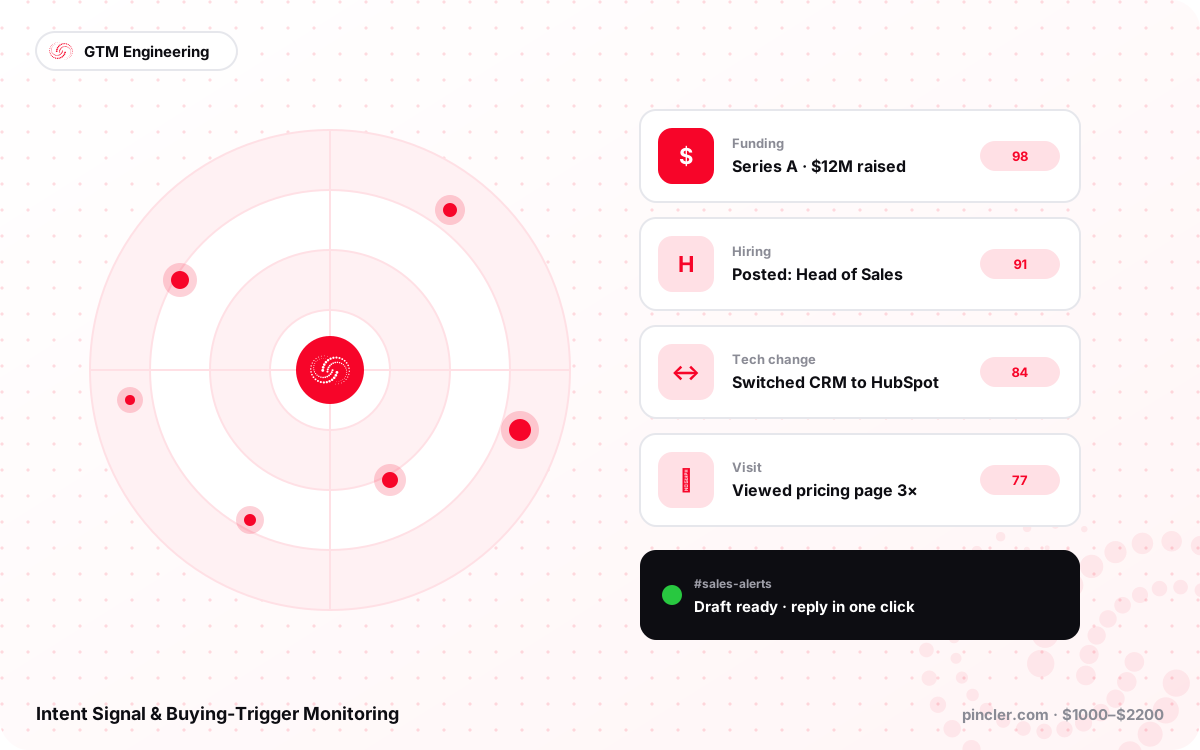
Intent Signal & Buying-Trigger Monitoring
Intent-signal monitoring that watches job posts, funding news, tech changes and website visits, then alerts sales with an AI-drafted message. GTM engineering from $1,000 to $2,200.