AI Invoice & Receipt Data Extraction System
An Invoice & Receipt Data Extraction costs $900 – $2,000 at PINCLER and takes 10–16 days to build. Turn a folder of scanned invoices into clean accounting entries in minutes.
The price moves inside the $900 – $2,000 band based on how many of the features you need, the number of integrations, the number of user roles and whether existing data has to be migrated. That band is possible because AI coding tools write the first draft while senior engineers review every line, add automated tests and harden security. It covers this one workflow with standard integrations and never exceeds $2,500.
- Fixed price
- $900 – $2,000
- Delivery
- 10–16 days
- Built with
- Gemini · GPT · Cursor · Claude Code · DeepSeek
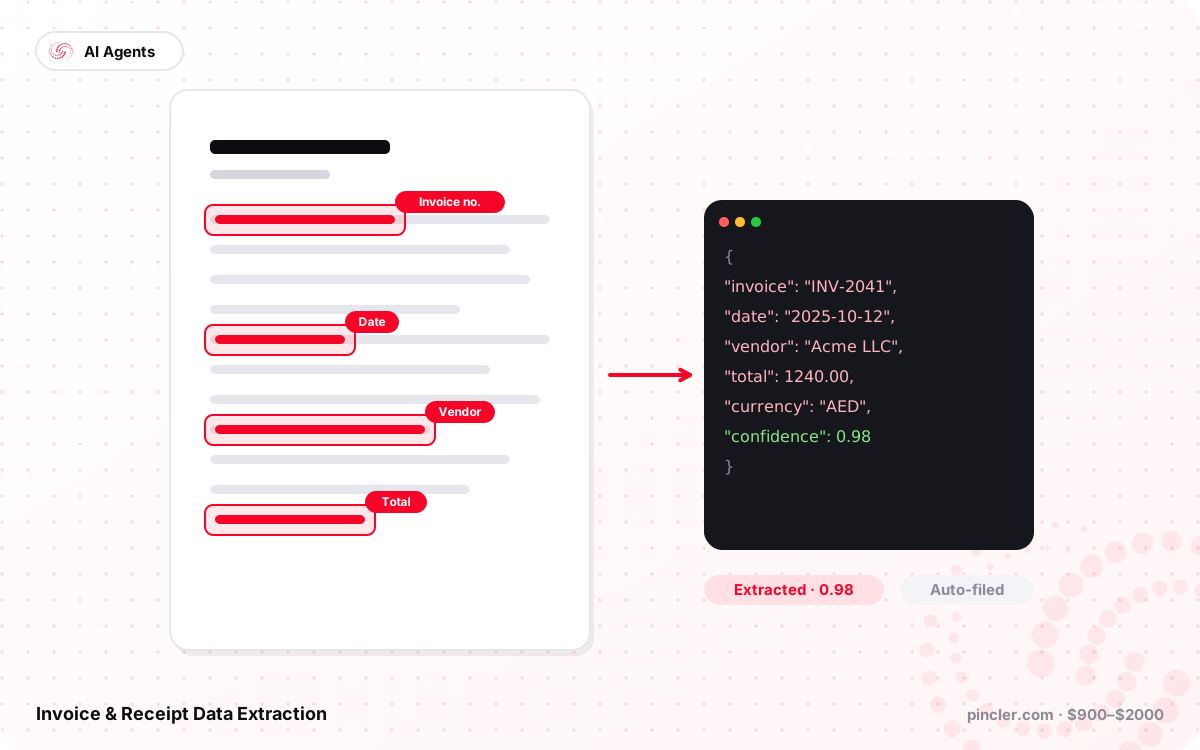
AI invoice and receipt data extraction that turns scans and PDFs into clean line items with VAT or GST, exported to your accounting software. Built from $900 to $2,000.
The problem
Accounts teams at trading companies, restaurants groups and construction firms in the UAE and India re-type thousands of supplier invoices and expense receipts every month. Each one takes three to five minutes, errors creep into VAT and GST returns, month-end closes late, and the finance manager spends weekends reconciling what a junior mis-keyed. Off-the-shelf OCR breaks on handwritten totals and Arabic headers.
What we build
We build an AI extraction pipeline that accepts invoices from email, WhatsApp, Drive or upload, reads them with Gemini and GPT vision models, extracts supplier, date, line items, VAT or GST and totals, validates arithmetic and flags anything uncertain for a quick human check. Clean data exports to Zoho Books, Tally, QuickBooks, Xero or Google Sheets. With Cursor and Claude Code we scaffold the pipeline and review screen fast, then measure accuracy on 200 of your real documents before launch. Custom software development from $900 to $2,000, never above $2,500, with all code in your repository.
Features included
- Ingest from email, WhatsApp, Drive or upload
- Line-item extraction with totals check
- UAE VAT and Indian GST field handling
- Arabic and English document support
- Confidence flags and human review screen
- Export to Zoho, Tally, QuickBooks or Xero
- Duplicate invoice detection
- Searchable archive of originals
What you receive
- Full source code in your GitHub repository
- Deployed pipeline in your cloud account
- Review dashboard with accuracy reporting
- Accounting software integration configured
- 30-day accuracy tuning and bug-fix window
How we build it
- Day 0: free 30-minute call to fix document types, volumes and the target accounting system, followed by a written fixed quote
- Days 1–5: the ingestion pipeline is built for email, WhatsApp, Drive and upload, with vision extraction of line items
- Days 6–10: accuracy is measured on around 200 of your real documents and tuned per supplier and field
- Days 11–13: the review screen, duplicate detection and export to Zoho, Tally, QuickBooks or Xero are wired
- Days 14–16: launch with the accuracy report signed off, staff training and the 30-day tuning window begins
What each budget gets you
| Budget | Build | What changes |
|---|---|---|
| $900 | Single format | Invoices ingested from email or upload, supplier, date, totals and VAT or GST extracted with arithmetic checks, exported to Google Sheets |
| $1,400 | Accounting sync | Adds line-item extraction, a confidence-flag review screen, duplicate detection and direct export to Zoho Books, Tally, QuickBooks or Xero |
| $2,000 | Full pipeline | Adds WhatsApp and Drive ingestion, Arabic document support, a searchable archive of originals and accuracy reporting per supplier and field |
Ideal for
- Trading and distribution companies
- Restaurant groups
- Construction contractors
- Accounting firms
- Logistics operators
FAQ
Invoice & Receipt Data Extraction: common questions
What is AI invoice and receipt data extraction?
AI invoice and receipt data extraction turns scanned invoices, PDFs and phone photos into structured accounting entries: supplier, date, line items, VAT or GST and totals. It reads Arabic and English documents, checks that the arithmetic adds up and flags anything uncertain for a two-click human review. Clean data then exports straight into Zoho Books, Tally, QuickBooks or Xero.
What does it cost and how long does it take?
An invoice extraction pipeline costs $900 to $2,000 at PINCLER, fixed after a free discovery call, and takes 10 to 16 days to deliver. Document variety, the number of supplier formats, language coverage and the target accounting system are what move the price. Vision model usage is billed to your own API account, and the build never exceeds $2,500.
How is accuracy tested before launch?
We measure accuracy on around 200 of your real documents before launch and tune against the suppliers you actually receive from, which is where most of the second week goes. You see the accuracy report, broken down by field, before handover rather than after. Extraction only goes live on the document types that clear your threshold.
Which accounting systems can it export to?
The pipeline exports to Zoho Books, Tally, QuickBooks, Xero and Google Sheets, and can push into an ERP through its API where one exists. Documents arrive from email, WhatsApp, Google Drive or direct upload, so suppliers do not have to change how they send them. Each posted entry links back to the original scan for audit.
How accurate is AI invoice extraction?
On printed invoices we typically see over 95% field accuracy after tuning on your own suppliers. Anything below a confidence threshold is routed to a review screen rather than silently entered, so an uncertain reading becomes a two-click correction instead of a wrong ledger entry. Handwritten totals and poor phone photos are where accuracy drops, and the system is built to flag rather than guess on those.
Where are our invoices stored?
Your invoices are stored in your own AWS S3 or Google Cloud bucket and database, with the full source code in your GitHub repository. Documents are sent to the vision model only for extraction and are not retained by the provider. The searchable archive of originals stays yours if you ever move off the system.
Is this better than Dext, Hubdoc or a built-in scanner?
Dext, Hubdoc and the scanners built into Zoho Books or QuickBooks are the right answer for standard printed invoices in English at modest volume, since they are cheap and need no build. A custom pipeline earns its place when you have Arabic headers, unusual supplier layouts, UAE VAT or Indian GST fields those tools mishandle, or volume where per-document pricing has become the larger cost.
Who is this for, and when is it not worth it?
Invoice and receipt extraction suits finance teams processing several hundred supplier documents a month across trading, restaurants, construction and logistics. At low volume, an off-the-shelf scanner and a careful bookkeeper will cost less than the build. Accuracy also depends on your document quality, so if most invoices arrive as blurry photos, fix the capture process before automating it.
Related
Similar projects within the same budget
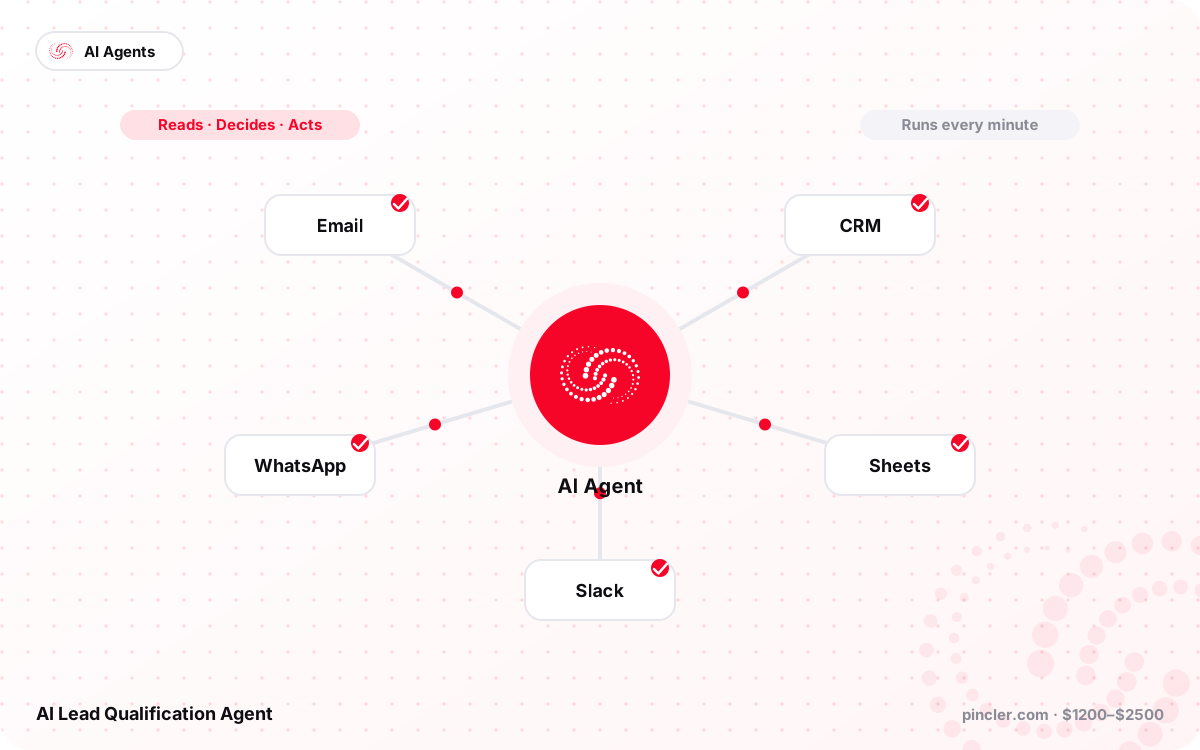
AI Lead Qualification Agent
An AI lead qualification agent that reads every inbound lead, scores it, asks follow-up questions and books meetings for your sales team. Built from $1,200 to $2,500.
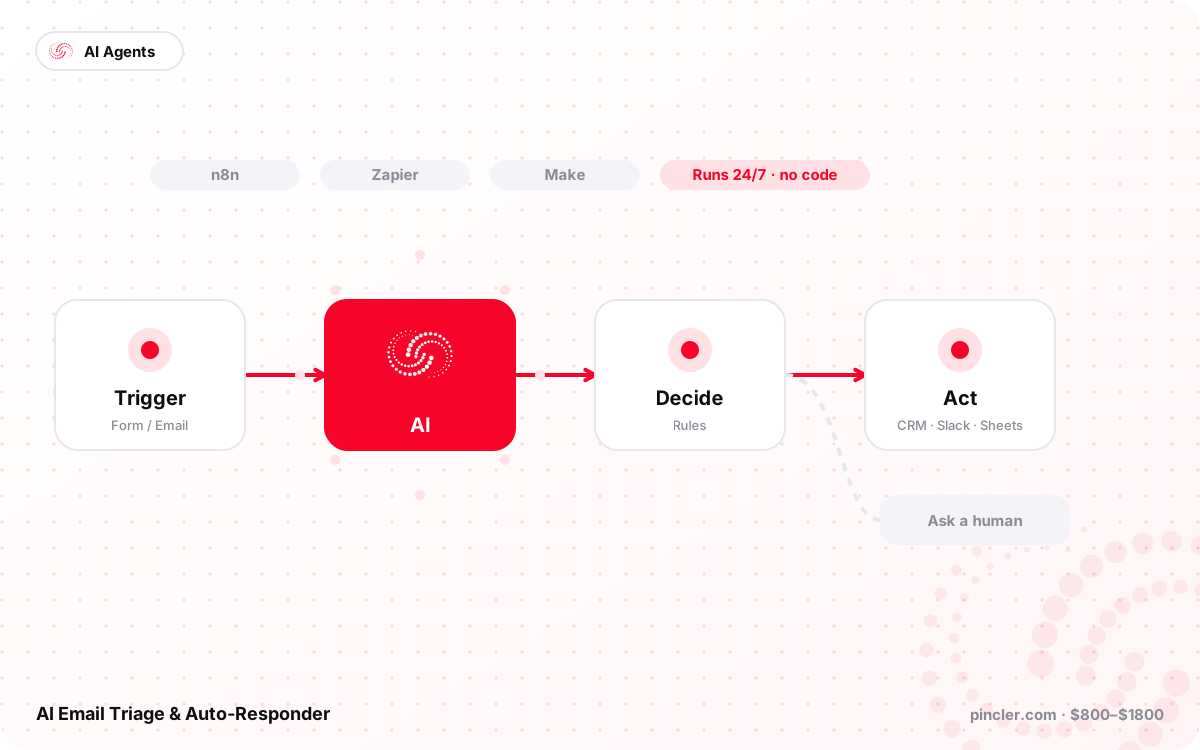
AI Email Triage & Auto-Responder
An AI email triage and auto-responder that sorts your inbox, drafts replies and routes requests to the right person. Email automation development from $800 to $1,800.
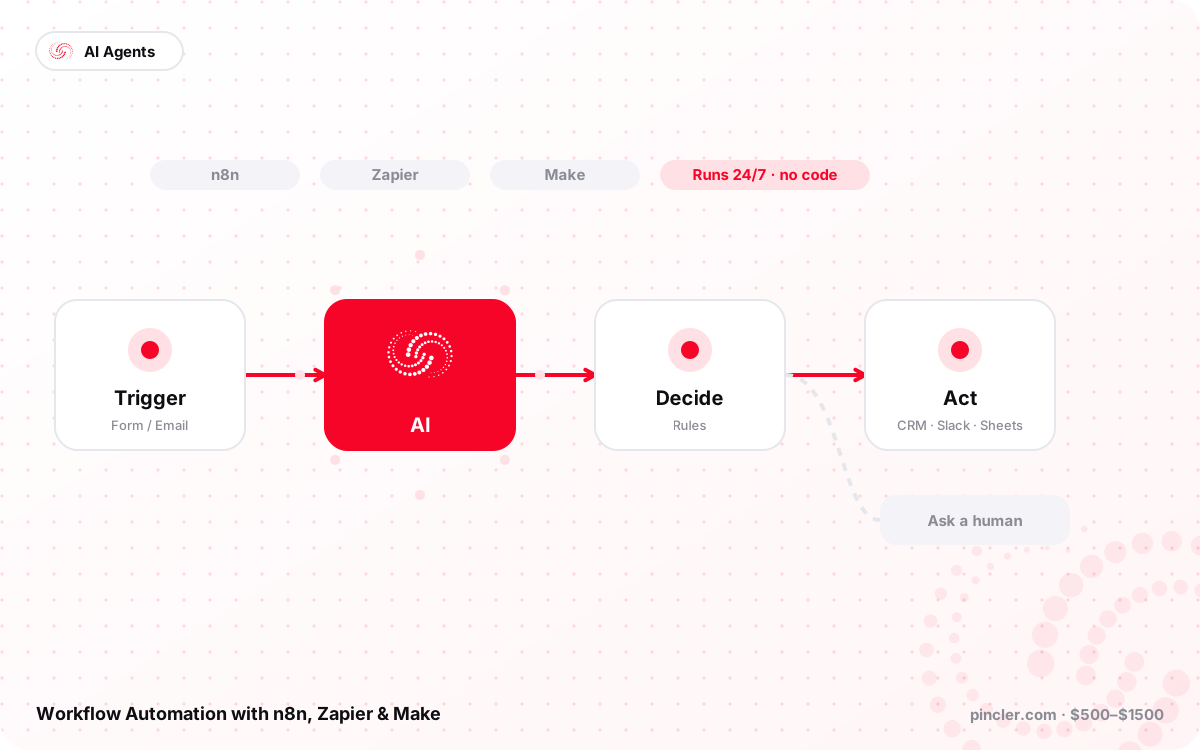
Workflow Automation with n8n, Zapier & Make
Workflow automation with n8n, Zapier or Make that connects your apps, removes copy-paste work and adds AI steps where useful. Automation development from $500 to $1,500.